Category rating — not an assessment of any specific brand
This rating covers a typical, mass-market
power tools product based on publicly available data.
It does not name or assess any specific manufacturer or product.
Individual products may perform better or worse.
Learn about verified ratings →
Below HIP Mark threshold
Score 3.1/10 — Standard mark requires 6.0
Standard
Silver
Gold
Category best achievable: 6.5
 Depleting — materials are being used up with no way to replace them
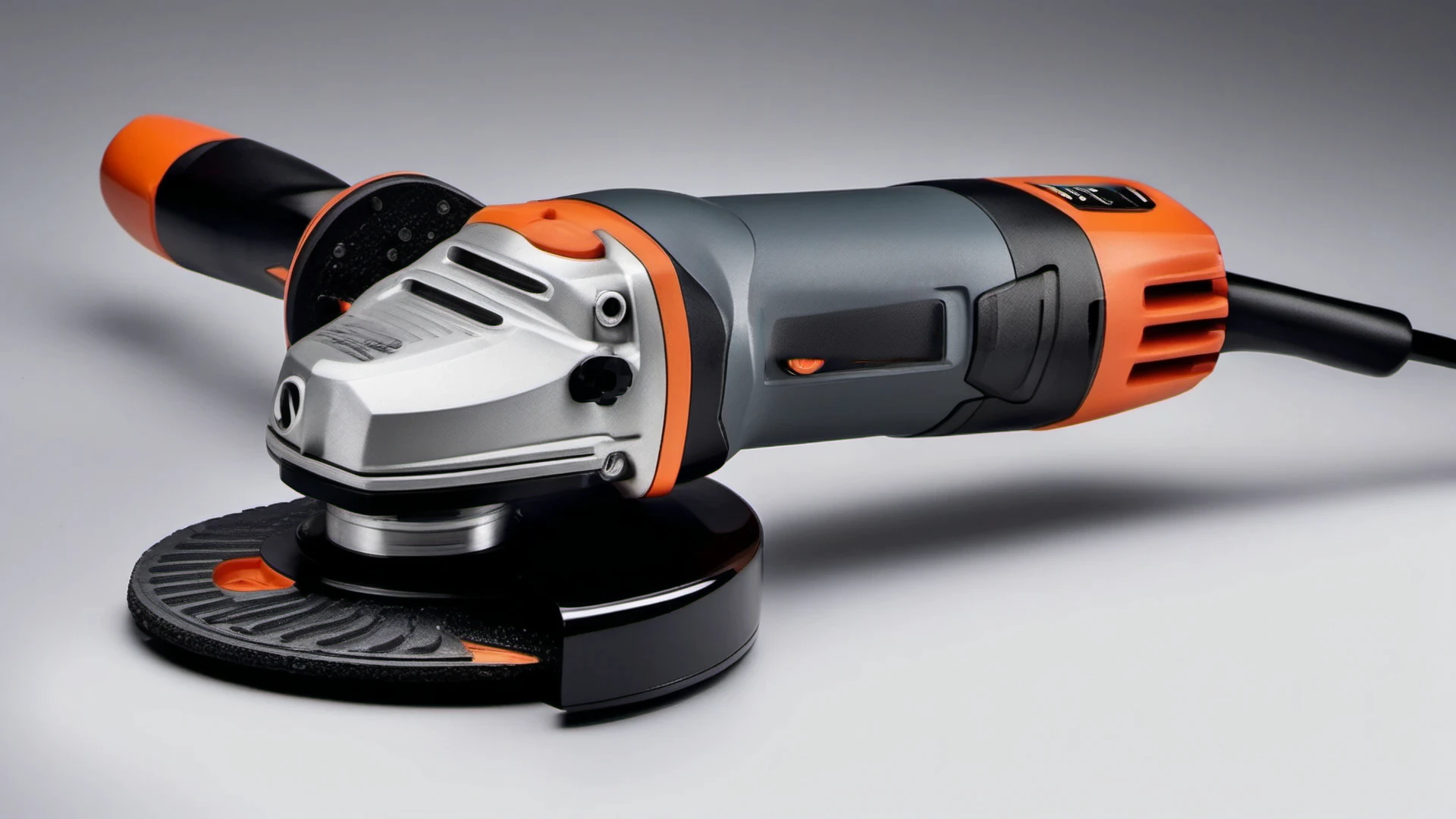
This is what a typical angle grinder looks like today. It's built to last longer than the typical one. If the maker shares their data, the score usually goes up.
Category baseline
3.1 HIP
Below Standard
Category ceiling: 6.5 HIP
Regenerative Index
-7.0
Depleting
Category ceiling RI: -2.0
What this score means
This is the starting score for Angle Grinders, based only on public data. No maker has sent us
their own data yet. The ceiling score (shown below) is what a product can reach when the maker
shares real evidence. To close the gap, makers apply for a verified rating.
Make this product? You can raise this score.
The starting score for this category is 3.1 HIP.
With full evidence, a product in this category can reach 6.5 HIP.
Our first verified product scored 6.9 and earned the HIP Mark.
Share your product data and we score what you can prove.
Apply for verified assessment
What to Check Before You Buy
- Check the armature and carbon brushes are stocked as spare parts. Brushes are a consumable in brushed-motor models; a £5 brush pair should not end a £100 tool's life.
- Confirm the spindle lock and gear assembly are serviceable. Grinders take heavy loads; stripped gear is a common failure that is repairable if parts are available.
- Look for a tool with a published service manual. Professional-grade tools almost always have these; the manual is the difference between a repairable tool and landfill.
- Check the disc guard and side handle are available as standard replacements. Safety-critical components should be replaceable; confirm before purchase.
Score Breakdown
How rare are the materials?
MSI · 20%
1.5
Why this score ▸
The product relies heavily on critical raw materials including cobalt, lithium, and neodymium, all listed on the EU Critical Raw Materials list with high supply risk. The absence of recycled content and the likely concentration of rare earth extraction in China further exacerbate the scarcity risk.
Where do the materials come from?
SCR · 18%
3.5
Why this score ▸
The angle grinder relies on copper and steel, which are typically sourced from China (high concentration risk) and other moderate-risk jurisdictions, creating a supply chain vulnerability. Due to the lack of submitted due diligence standards, alternative suppliers, or audit verification, the assessment defaults to a conservative High Risk rating.
Can it be recycled?
RC · 18%
3.0
Why this score ▸
The angle grinder is assumed to be glued and lacks a take-back scheme, limiting practical recovery to approximately 20% of the product weight (primarily metal components). Materials like ABS plastic and nichrome heating elements are technically recyclable but are routinely landfilled in practice, preventing a higher score despite the presence of recoverable metals.
Can you fix it?
R · 13%
4.0
Why this score ▸
The product is an angle grinder with mixed fasteners assumed to include adhesive due to missing data, making disassembly difficult. While spare parts are available, the lack of a public service manual and the conservative assumption of glued components limit the score to the 'Difficult to Repair' range.
Is it made fairly?
SEI · 8%
3.5
Why this score ▸
The product is manufactured in China, a moderate-to-high risk jurisdiction for labour and environmental issues, with no submitted third-party audits or certifications. While no specific adverse findings were flagged, the absence of verified evidence such as RBA audits, ISO 14001, or B Corp certification limits the score to the elevated risk baseline.
How long will it last?
PL · 8%
7.0
Why this score ▸
The product achieves an above-average score due to a 3-year warranty and a stated design life of 10 years, which aligns with the 7-8 band for durable power tools. However, the lack of submitted IP rating and modular design data prevents a higher rating, as these are critical for confirming long-term durability in industrial environments.
Does it give back to nature?
RI · 15% · scale −10 to +10
-7.0
Why this score ▸
The product is classified as Depleting (-7) because it relies on virgin mined materials with zero recycled content and no take-back scheme. Not Depleting because recycled content >= 50% with verified take-back does not apply, as both are absent. This aligns with the standard for conventional manufactured goods like angle grinders lacking any regenerative certifications or closed-loop programmes.
MSI 20% · SCR 18% · RC 18% · R 13% · SEI 8% · PL 8% · RI 15% = 100%
About the HIP Methodology ▸
Starting scores are low on purpose. We only count what we can confirm from public data,
so most products sit between 2 and 4 out of 10 before a maker shares their own evidence.
That gap between the starting score and what a product could reach is the whole point.
When a maker proves what their product is really made of, the score goes up.
The HIP Mark shows it has been checked.
Read the full methodology →
Consumer Summary
This angle grinder has an overall HIP Score of 3.1 out of 10, indicating significant challenges in its environmental impact. Its Regenerative Index is -7.0, which means the product relies heavily on new raw materials and has very limited potential for recycling or reuse at the end of its life.
What This Means For You
When buying power tools like this, look for models that explicitly state they contain recycled materials and offer a clear take-back or recycling program. Prioritize products with long warranties and designs that allow for easy repair, as these features help extend the tool's useful life and reduce waste.
Data Transparency
This is a category rating based on publicly available data. The following data fields were not submitted by a manufacturer and have been estimated conservatively using open reference data and the category default assumptions table v0.1 (provisional — sources pending full citation):
material_percentagesrecycled_content_pctcountry_of_primary_extractionprimary_sourcing_countriestier1_supplier_countdue_diligence_standardalternative_supplier_existsdisassembly_typerecyclable_streams_pctrecycling_label_complianttakeback_schemedesign_for_disassemblyfastener_typespare_parts_years_committedservice_manual_publicifixit_scoreecodesign_in_scopemanufacturing_countriesenvironmental_certificationsthird_party_certificationrba_audit_completedmodern_slavery_statementilo_compliance_claimedip_ratingmodular_designsoftware_support_yearsprimary_material_originregenerative_certificationsclosed_loop_programmeend_of_life_programmematerial_origin_certifiedregenerative_practices
A verified rating uses manufacturer-submitted data and produces a more accurate, product-specific score.
Material Watch Points
- Cobalt — EU Critical Raw Materials list
- Lithium — EU Critical Raw Materials list
- Neodymium — EU Critical Raw Materials list
- China ~70% of global rare earth mine production, ~85% of processing — high supply concentration
- Primary materials (copper, steel) likely concentrated in China
- No due-diligence programme documented
- No alternative supplier documented
- No third-party audit verification
How this score was calculated
The HIP Score is a weighted average of seven dimensions measuring material
resilience, supply chain integrity, and end-of-life characteristics.
| Code |
Dimension |
Weight |
Score |
| MSI |
Material Scarcity Index |
0.20 |
1.5 / 10 |
| SCR |
Supply Chain Risk |
0.18 |
3.5 / 10 |
| RC |
Recyclability and Circularity |
0.18 |
3.0 / 10 |
| R |
Repairability |
0.13 |
4.0 / 10 |
| SEI |
Social and Environmental Impact |
0.08 |
3.5 / 10 |
| PL |
Product Longevity |
0.08 |
7.0 / 10 |
| RI |
Regenerative Index |
0.15 |
-7.0 (raw) |
Regenerative Index note: RI scores on a unique scale of -10 to +10.
Before weighting, the raw score is normalised: RI normalised = (RI raw + 10) / 2.
This product's RI band is Depleting.
Weighted HIP Score: 3.1 / 10
· Methodology v1.5
Base weights shown. Some product types use category-specific weight profiles —
see full methodology for details.
Read the full methodology →
Data Sources
This rating draws on the following public sources:
USGS Mineral Resources Program (public domain) · EU Critical Raw Materials List 2023 (CC BY 4.0) · World Bank Worldwide Governance Indicators (CC BY 4.0) · Category default assumptions table v0.1 (provisional — sources pending full citation)
All sources are public domain or published under open data licences.
Full source list →
About this rating:
HIP scores are based on public data at the date shown.
They show how well a product holds up over time — not a promise about safety or future supply.
Resourcehip is not liable for choices made based on these ratings.
Scope:
This is a category rating for Angle Grinders and does not assess any specific brand or manufacturer.
Individual products may perform better or worse than this baseline.
Produced under Resourcehip Scoring Methodology 1.5 (CC BY-NC 4.0).
AI disclosure:
An AI model scored this rating on our own hardware — no data was sent to the cloud.
A human reviewer checked and approved it before it went live.
Model: qwen3.5:35b.
AI transparency notice →
Not financial or investment advice.
Ratings are for consumer information only.
Dispute this rating · Our methodology · All ratings
Assessed: 2026-06-17 · Next review: 2027-04-26 · Methodology 1.5