
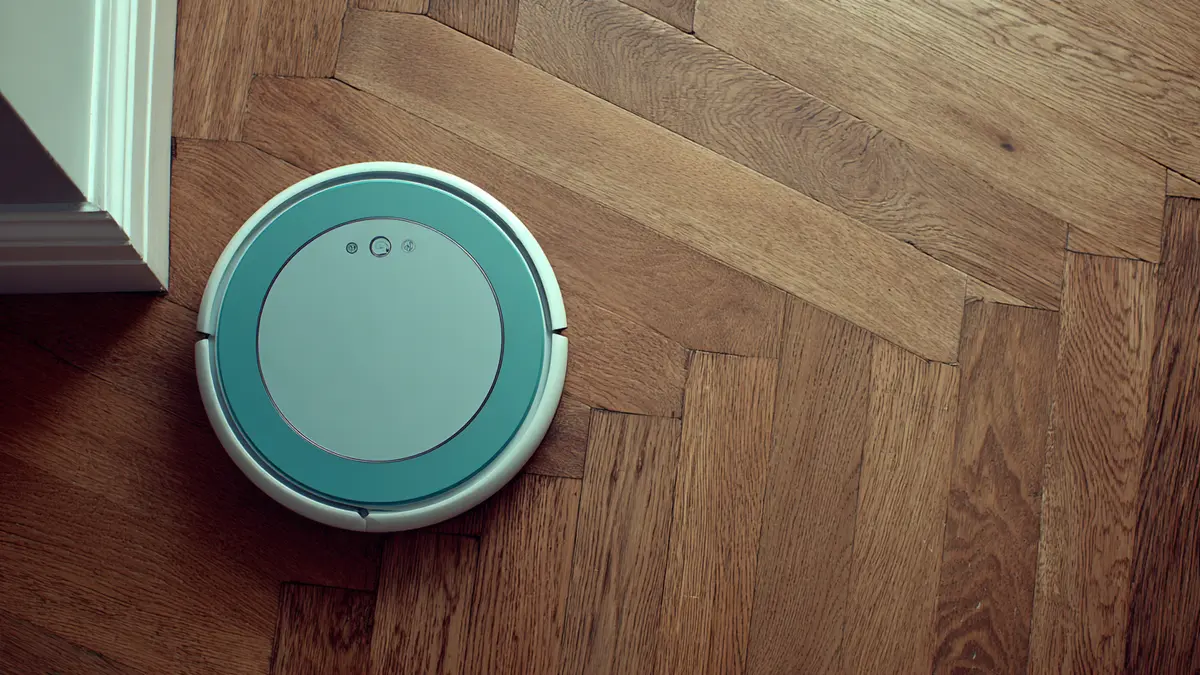
The Category That Has a Software Problem
A robot vacuum is unusual among small appliances. Even when the hardware works perfectly, the maker can kill the device by switching off a cloud service or pulling the companion app. We have seen it happen across smart-home products — security cameras, smart speakers, fitness trackers. Robot vacuums follow the same pattern.
That puts a £400–£800 device on a software lifespan, not a hardware one. It is the biggest failure risk in the category — and it is invisible when you buy.
The Resourcehip Human Impact Profile (HIP) rates the device end-to-end. By that measure, the typical robot vacuum scores 2.3 out of 10. The full breakdown is on the robot vacuums rating page.
What HIP Measures for a Robot Vacuum
Three HIP dimensions dominate the robot-vacuum category:
- Material Scarcity (MSI). Baseline 1.5/10 — lithium, cobalt (a battery material), and neodymium (a rare-earth metal) magnets, all on the EU Critical Raw Materials list (a list of materials at risk of supply shortage), with no recycled content assumed. Ceiling 5.5/10 with meaningful reductions in scarce materials and some recycled content.
- Repairability (R). Baseline 3.0/10 — higher than most small appliances because brushes, filters, and side-arms are usually easy to remove. Ceiling 9.0/10 with screw-fastened internals, a multi-year spare-parts commitment, and a public repair manual.
- Product Longevity (PL). Baseline 4.0/10 — a 2-year warranty and a 5-year design life. Ceiling 8.0/10 with a longer warranty, an IP rating (water- and dust-resistance grade), and — critically — a stated multi-year software-support commitment.
Software lifespan is where this category quietly fails. A robot vacuum with no published software-support promise is a bricked unit waiting to happen.
The Gap Between Baseline and Ceiling
The robot-vacuum category ceiling is HIP 6.6 / RI -2.0 (Extractive), earning the Standard HIP Mark.
That is a 4.3-point HIP gap and a shift across five Regenerative Index tiers between the typical unit and what is achievable today. Closing it requires:
- Recycled content moving from 0% (assumed) to 50%+
- Screw-fastened access to the battery and main board
- Spare parts going from "filters and brushes only" to a full parts programme covering motors, boards, and batteries
- Take-back moving from absent to manufacturer-run
- Stated software-support window of 5+ years — published, not implied
- Design life moving from 5 years to 8+
- Verified manufacturing audits (ISO 14001 (an environmental management standard) or equivalent)
What to Check Before You Buy
- Find the software-support commitment in writing. If the maker does not publish a minimum number of years of firmware updates, assume the worst. A robot vacuum with no software floor is on a software lifespan, full stop.
- Check whether the unit can run without the cloud. If the companion app is the only way to start a clean, the device dies the day the cloud does. Local control via Bluetooth, a physical button, or a local network protocol (Matter, HomeKit, MQTT (a local network standard)) is the difference between a device with two lives and one.
- Confirm a screw-fastened battery and main board. Replaceable brushes and filters are not enough. The failures that retire most robot vacuums are battery decay (3-4 years) and main-board wear (after a few thousand cycles). Both should be user-replaceable.
- Check the warranty length and the take-back path. Two years is the EU floor. A four- or five-year warranty signals confidence. A take-back scheme is the only proper end-of-life route for a lithium-ion battery.
We do not name brands. The four checks above are visible on any maker's product page — though "minimum software support years" is the one most often missing. That absence is itself a signal.
How to Read a Resourcehip Robot-Vacuum Rating
Every robot-vacuum listing on Resourcehip carries:
- A HIP score from 0 to 10, calculated against the robot-vacuum category baseline.
- A Regenerative Index from -10 to +10, with a tier name (Depleting, Extractive, Renewable, Restorative, Regenerative).
- A HIP Mark on verified ratings only: Standard at 6.0, Silver at 7.5, Gold at 9.0 with RI ≥ +6.
Category Baseline ratings — where no maker evidence has been submitted — sit at the conservative default. Verified Ratings can climb up to the ceiling.
For the methodology, see How HIP scoring works. For every robot vacuum we have rated:
The Bigger Picture
Robot vacuums are the warning sign for a much bigger problem — smart-home hardware whose useful life depends on a cloud service the buyer does not own. The HIP score makes that visible by penalising the lack of a published software-support window.
A rating that counts software lifespan changes the question. It moves from "what can this device do today?" to "what will it do in five years?" That second question is the right one. It is also the one the category is built to hide.
Methodology and edits by Chris Bowness; assistive AI used for drafting.