
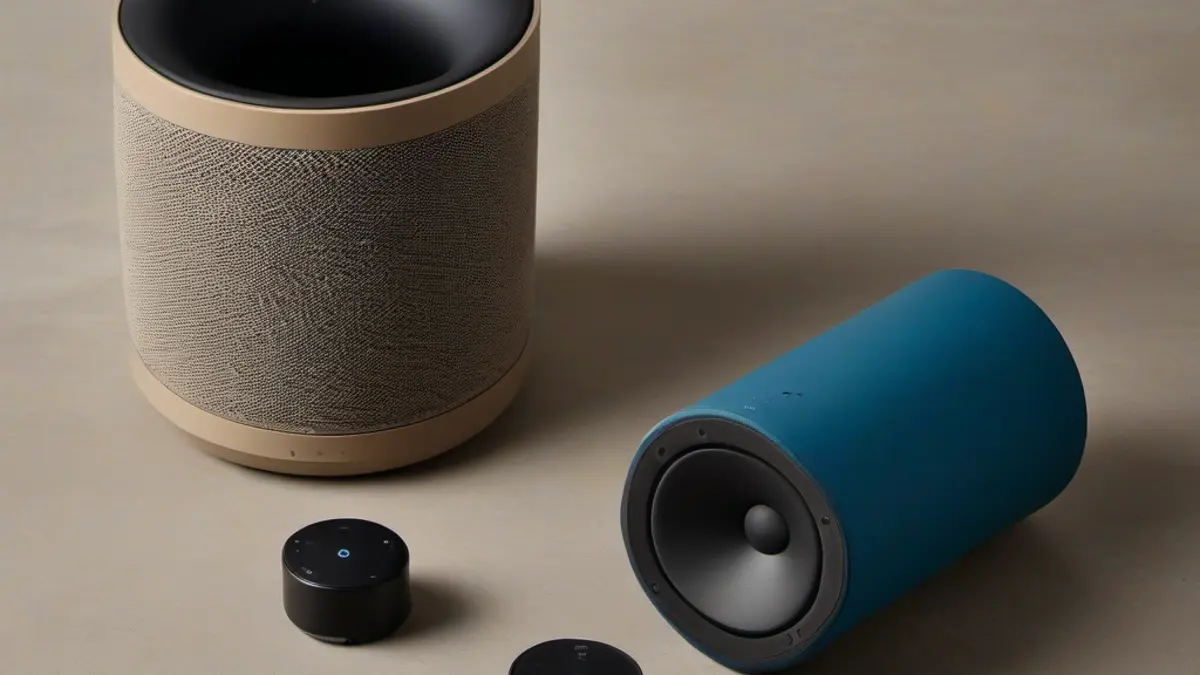
A 30-Year Driver Wired to a 4-Year Battery
Speaker drivers are mature engineering. A well-made driver in a domestic speaker can produce good sound for 25 to 40 years. The Bluetooth radio is solid-state and does not wear out. The amplifier runs for decades on a well-designed board.
Then there is the battery.
A typical lithium-ion battery lasts three to five years. When it degrades, the speaker still sounds fine — but if the battery cannot be swapped, the whole device is retired. The Resourcehip Human Impact Profile (HIP) rates the speaker as a whole, battery included. By that measure, the typical portable speaker scores 2.0 out of 10. The full breakdown is on the portable speakers rating page.
What HIP Measures for a Portable Speaker
Three HIP dimensions sit at the bottom of the category:
- Repairability (R). Baseline 1/10 — almost always glued, ultrasonically welded (fused shut by vibration), or sealed with adhesive gaskets (sticky seals) for water resistance. Ceiling 9/10 with screw-fastened access, stocked spare parts, and a public repair manual.
- Recyclability and Circularity (RC). Baseline 1.5/10 — sealed cases, lithium batteries, and mixed-material drivers send the whole device to landfill or e-waste. Ceiling 7.5/10 with screw-based disassembly and a manufacturer take-back scheme.
- Material Scarcity (MSI). Baseline 1.5/10 — neodymium (a rare-earth metal) magnets in the drivers, lithium and cobalt (a battery material) in the battery, copper in the voice coil (the wire that makes the driver move). Ceiling 5.2/10 with less scarce-material content and some recycled inputs.
The other four dimensions — Supply Chain Risk, Social and Environmental Impact, Product Longevity, and the Regenerative Index — track with the rest of small consumer electronics.
The Gap Between Baseline and Ceiling
The portable-speaker category ceiling is HIP 6.4 / RI -2.0 (Extractive), earning the Standard HIP Mark.
That is a 4.4-point HIP gap and a shift across five Regenerative Index tiers between a typical speaker and what is achievable today. Closing it requires:
- Recycled content moving from 0% (assumed) to 50%+
- Screw-fastened access to the battery and main board
- A user-serviceable battery design — without this, the rest of the durability story collapses
- Multi-year spare-parts programme
- Take-back moving from absent to manufacturer-run
- Design life moving from 5 years to 10+
That third bullet — a serviceable battery — is the single biggest lever in this category, just as it is for electric toothbrushes. Speakers and earbuds sit in the same space. But speakers are large enough to make this solvable. Earbuds are not.
What to Check Before You Buy
- Look for a user-replaceable battery. A speaker built around a swappable battery cell — or one with a published replacement procedure — is the difference between a 4-year disposable and a 15-year keeper.
- Confirm screw-fastened access. Glue and ultrasonic welding are the most common shortcuts for an IP rating (water- and dust-resistance grade). Gasketed, screw-fastened housings can hit the same rating without killing repairability.
- Check the warranty length. Two years is the EU floor. A three- to five-year warranty signals the maker expects the battery to last well beyond that.
- Check whether the speaker can run wired. A model that takes a 3.5 mm or USB-C audio input will still work if the Bluetooth standard changes or the wireless audio format it uses is retired. Battery-only, Bluetooth-only speakers are the most fragile in the category.
We do not name brands. The four checks above are visible on any maker's product page if you look.
How to Read a Resourcehip Portable-Speaker Rating
Every portable-speaker listing carries:
- A HIP score from 0 to 10, measured against the portable-speaker category baseline.
- A Regenerative Index from -10 to +10, with a tier name (Depleting, Extractive, Renewable, Restorative, Regenerative).
- A HIP Mark on verified ratings only: Standard at 6.0, Silver at 7.5, Gold at 9.0 with RI ≥ +6.
Category Baseline ratings sit at the conservative default. Verified Ratings — where the maker can show the receipts — can climb up to the ceiling.
For the methodology, see How HIP scoring works. For every portable speaker we have rated:
Portable Speakers HIP Rating →
The Bigger Picture
In portable speakers, the gap between potential lifespan and actual lifespan is unusually wide. The drivers will outlast the buyer. The battery will not. Almost no product on sale today is built to bridge that gap. A category ceiling of HIP 6.4 has plenty of room to move. A maker that builds a 15-year speaker around a serviceable battery has a story nobody else in this space is telling.
Methodology and edits by Chris Bowness; assistive AI used for drafting.