
A Surprisingly Concentrated Footprint
An electric toothbrush is small. The environmental cost of the device is not.
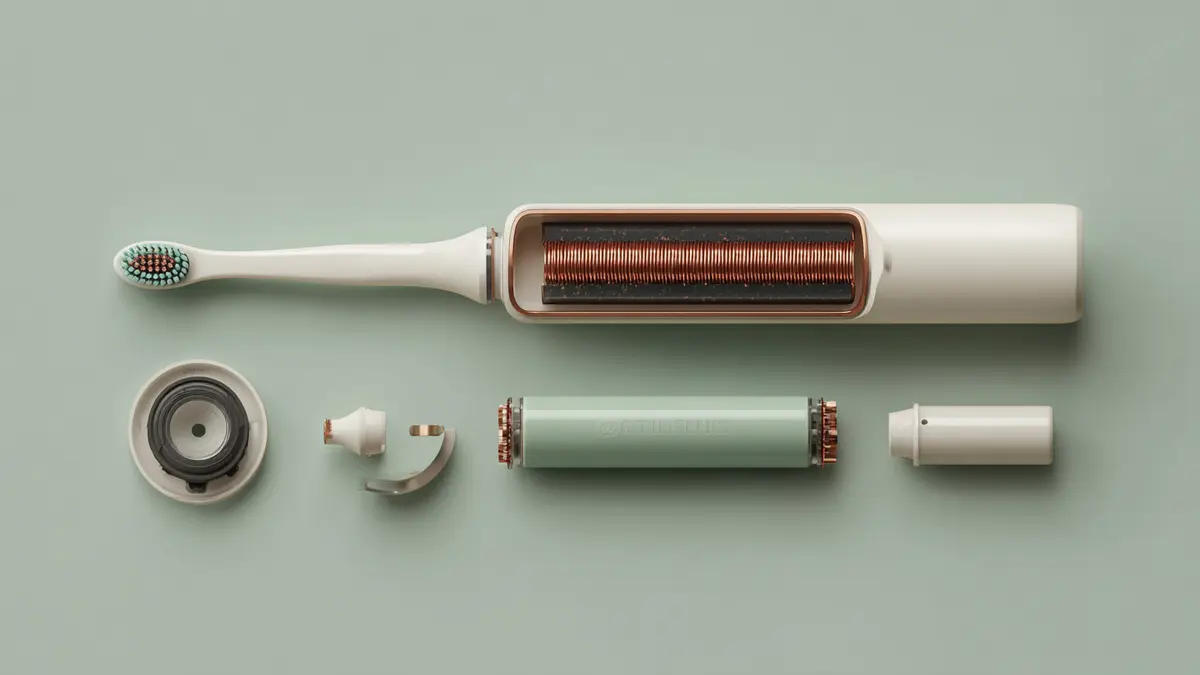
A typical handle contains a lithium-ion battery, a copper coil, a neodymium (a rare-earth metal) magnet, and a sealed ABS (a rigid plastic) housing. All four materials sit on lists of scarce materials or supply-risk indexes. The battery alone disqualifies the device from kerbside recycling. The handle is glued shut. The motor is not user-serviceable. Most are designed for a four-year life.
The Resourcehip Human Impact Profile rates the handle as the durable device. Replacement brush heads are a separate conversation — we return to them at the end of this guide.
By that measure, the typical mass-market electric toothbrush scores 2.0 out of 10. That is among the lowest baselines in the personal-care category. The full breakdown is on the electric toothbrushes rating page.
What HIP Measures for an Electric Toothbrush
Three HIP dimensions dominate this category:
- Material Scarcity (MSI). The baseline scores 1.5/10. Lithium and cobalt are EU Critical Raw Materials (a list of materials at risk of supply shortage). Most handles use both with no recycled content. The verified ceiling reaches the upper-mid-scarcity range only by using less of these materials and sourcing them with diversified, audited supply.
- Repairability (R). Baseline: 1/10 — glued, no spares, no repair manual. Ceiling: a screw-fastened handle with stocked spares and a public repair manual changes the picture entirely.
- Recyclability and Circularity (RC). Baseline 2/10 — sealed handles send the whole device to landfill or e-waste at end of life. Ceiling mid-7s with screw-based disassembly and a manufacturer take-back scheme.
The remaining four dimensions — Supply Chain Risk, Social and Environmental Impact, Product Longevity, and the Regenerative Index — all improve with the same fixes. Cleaner sourcing, longer warranties, verified audits, recycled inputs, and end-of-life recovery.
The Gap Between Baseline and Ceiling
The electric-toothbrush category ceiling is HIP 6.5 / RI -2.0 (Extractive), earning the Standard HIP Mark.
That is a 4.5-point HIP gap and a shift across five Regenerative Index tiers between the typical glued mass-market handle and what is technically possible today. Closing it requires:
- Recycled content moving from 0% (assumed) to 50%+
- Disassembly moving from glued to screw-fastened
- Battery moving from sealed to user-replaceable
- Spare-parts commitment shifting from "none" to multi-year
- Take-back moving from absent to manufacturer-run
- Design life moving from 4 years to 7+
A user-replaceable battery alone moves three dimensions: Repairability, Recyclability, and Product Longevity. It is one of the highest-impact design choices in the entire HIP framework. It is also almost universally absent from the category.
What to Check Before You Buy
- Look for a user-replaceable battery. This is the single biggest signal. A handle with a swappable battery lasts twice as long as a sealed one. It is also the difference between a recyclable device and an e-waste hazard.
- Confirm a multi-year spare-parts commitment. Brush-head adapters, battery-bay covers, and motor seals are the parts that fail. Manufacturers who stock them as separate spare parts score much higher on Repairability.
- Check for a take-back scheme. Lithium-ion batteries cannot legally go in kerbside recycling in the UK. Without a manufacturer return path, your only legal option is a council battery bin. The rest of the handle goes to landfill.
- Check the warranty. Two years is the EU floor and the category norm. Five years is what the ceiling looks like.
We do not name brands. The four checks above are visible on any manufacturer's product page if you look for them.
A Note on Replacement Heads
We rate the handle. The brush heads are a separate environmental conversation, mostly determined by:
- Whether the head is recyclable (most are not — mixed plastic and nylon bristles bonded to a plastic stem)
- Whether the manufacturer offers a head take-back scheme
- Whether bamboo or recycled-plastic heads are available for the same handle
If lifetime impact matters to you and your handle scores well, the head decision is the next lever. Some buyers choose to go back to a manual toothbrush with a bamboo handle. That is a fair alternative to the whole electric category. HIP does not score it because manual toothbrushes are not in scope. But a manual toothbrush has a fraction of the embodied cost (the environmental cost of making and disposing of a product) of an electric handle.
How to Read a Resourcehip Electric-Toothbrush Rating
Every electric-toothbrush listing carries:
- A HIP score from 0 to 10, calculated against the electric-toothbrush category baseline.
- A Regenerative Index from -10 to +10, with a tier name (Depleting, Extractive, Renewable, Restorative, Regenerative).
- A HIP Mark on verified ratings only: Standard at 6.0, Silver at 7.5, Gold at 9.0 with RI ≥ +6.
Category Baseline ratings — where no manufacturer evidence has been submitted — sit at the conservative default. Verified Ratings can climb up to the ceiling.
For the methodology, see How HIP scoring works. For every electric toothbrush we have rated:
Electric Toothbrushes HIP Rating →
The Bigger Picture
Electric toothbrushes are a category where one design choice — a user-replaceable battery — would move the whole curve. None of the technical barriers are real. The barriers are commercial. The category will not improve until buyers treat "replaceable battery" as a primary need rather than a niche feature. HIP scoring exists to make that visible at the point of purchase.
Methodology and edits by Chris Bowness; assistive AI used for drafting.