
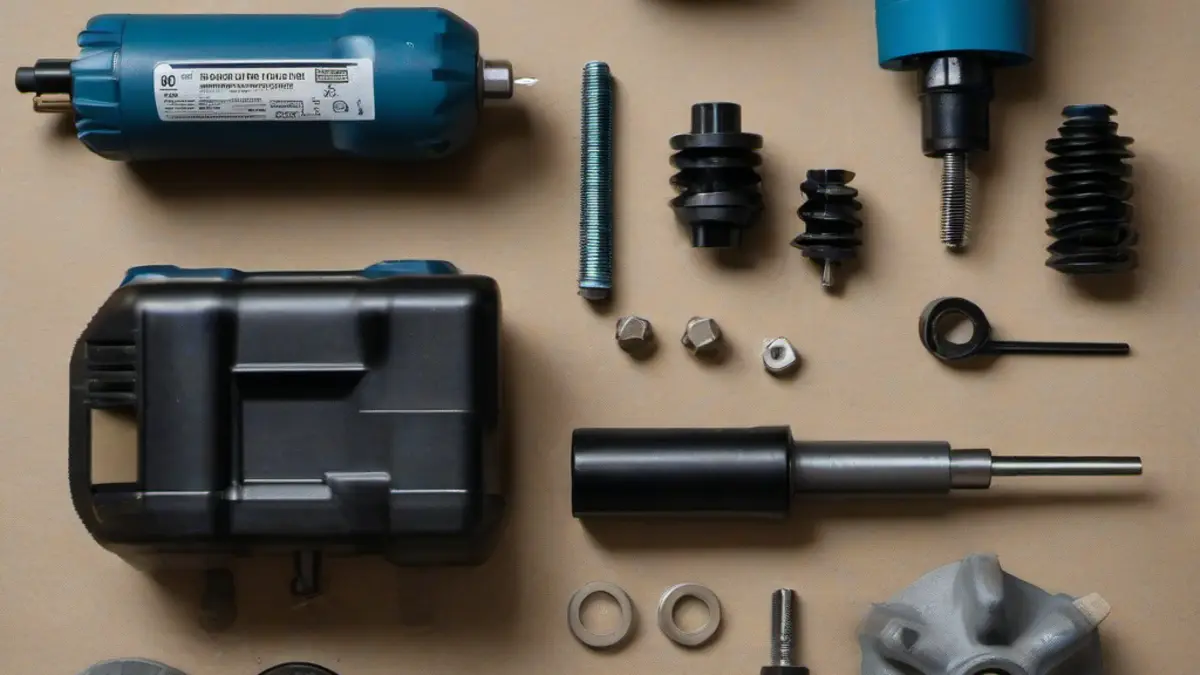
A Tool That Should Last Decades
A cordless drill is mechanically simple. The motor is durable, the gearbox is overbuilt, the chuck is replaceable. With reasonable care, the body of a quality cordless drill should last 20 years or more.
The battery is the part that does not.
A typical lithium-ion power-tool battery lasts three to five years. When the battery fails, the drill still works — but the tool is dead, unless the manufacturer's battery system is still in production. Most are not, by the time it matters.
That single decision, made years before you buy, decides whether the drill is a long-lasting tool or a five-year disposable.
The Resourcehip Human Impact Profile rates the drill plus its battery system. By that measure, the typical mass-market cordless drill scores 2.5 out of 10. The full breakdown is on the cordless drills rating page.
What HIP Measures for a Cordless Drill
The cordless-drill category has one built-in advantage over most consumer electronics: the battery is already user-removable. That alone lifts Repairability and Product Longevity above many sealed categories. The weak spots are elsewhere.
- Material Scarcity (MSI). Baseline 1.5/10. Lithium, cobalt, and rare-earth motor magnets all appear on the EU Critical Raw Materials list (a list of materials at risk of supply shortage). Ceiling 5.5/10 with reduced critical-material content and some recycled inputs.
- Repairability (R). Baseline 4/10 — already strong because the battery is removable. Ceiling 9/10 with screw-fastened housing, multi-year spare-parts commitment, and a public repair manual.
- Product Longevity (PL). Baseline 5/10 — design life of around seven years, roughly the lifespan of two battery cycles. Ceiling 9/10 with extended warranty, IP rating, and the critical lever: a battery system the manufacturer has committed to producing for a decade or longer.
The remaining four dimensions — Supply Chain Risk, Social and Environmental Impact, Recyclability, the Regenerative Index — track with the rest of the small-power-tool category.
The Gap Between Baseline and Ceiling
The cordless-drill category ceiling is HIP 6.7 / RI -2.0 (Extractive), earning the Standard HIP Mark.
That is a 4.2-point HIP gap between a typical mass-market drill and what is technically possible today. It also means a shift across five Regenerative Index tiers. Closing it requires:
- Recycled content in the housing and motor moving from 0% (assumed) to 50%+
- Screw-fastened access to the gearbox and motor brushes
- A multi-year spare-parts programme covering chuck, motor brushes, switch, and gearbox seals
- Take-back moving from absent to manufacturer-run
- A long-term battery-system commitment — published, with a stated minimum production window
- Design life moving from 7 years to 12+
That fifth bullet is the most important check in this category. It is also the one most often missing from product pages.
What to Check Before You Buy
- Find the battery-system commitment in writing. A drill is only as durable as the manufacturer's promise to keep selling the battery that fits it. A 10+ year commitment turns a £150 drill into a long-lasting tool. Without it, you are buying a 5-year disposable with an £80 battery price tag.
- Confirm the chuck and motor brushes are replaceable. These are the parts that wear. Manufacturers who stock them as separate spare parts score much higher on Repairability.
- Check whether the battery system is shared across the tool range. A single battery family that runs the drill, the impact driver, the saw, and the leaf blower spreads the embodied cost (the environmental cost of making and disposing of a product) across more tools. It also means the manufacturer is more likely to keep making it. A multi-tool battery family is a much harder commitment to walk away from.
- Check the warranty length. Two years is the legal minimum. Three- or five-year warranties show manufacturer confidence. A trade/professional line will often have longer warranties than a DIY range from the same brand.
We do not name brands. The four checks above are visible on any manufacturer's product page if you look for them.
How to Read a Resourcehip Cordless-Drill Rating
Every cordless-drill listing on Resourcehip carries:
- A HIP score from 0 to 10, calculated against the cordless-drill category baseline.
- A Regenerative Index from -10 to +10, with a tier name (Depleting, Extractive, Renewable, Restorative, Regenerative).
- A HIP Mark on verified ratings only: Standard at 6.0, Silver at 7.5, Gold at 9.0 with RI ≥ +6.
Category Baseline ratings sit at the conservative default. Verified Ratings, where the manufacturer can show the receipts, can climb up to the ceiling.
For the methodology, see How HIP scoring works. For every cordless drill we have rated:
The Bigger Picture
The cordless-drill category is one of the few where the basic engineering already supports a multi-decade product. The barrier to a Silver-grade drill is not technical. It is a business decision about how long to keep producing the battery system that fits it.
A category whose ceiling sits in the Standard band with one well-evidenced submission has clear room to push for Silver. A manufacturer that publishes a 15-year battery-system commitment would, on its own, change the conversation in this category.
Methodology and edits by Chris Bowness; assistive AI used for drafting.