
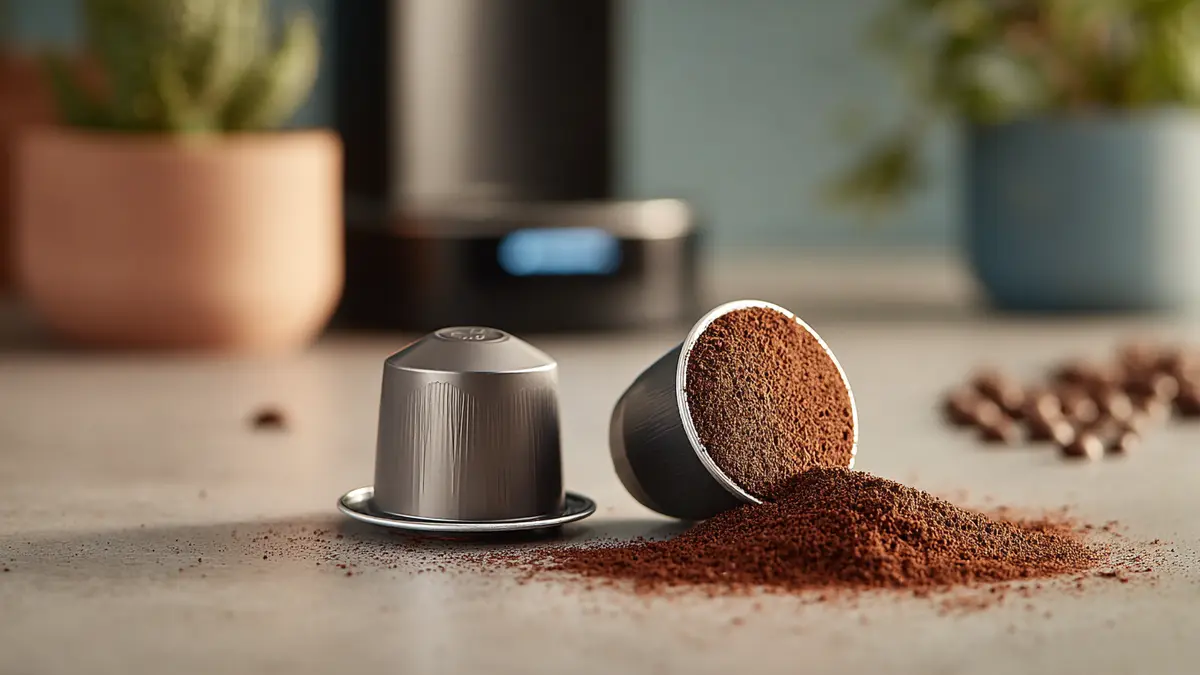
The Two Sustainability Questions
Most coverage of pod-machine sustainability focuses on one question: are the pods recyclable? That is a fair question. It is also not the question this guide answers.
The Resourcehip Human Impact Profile rates the machine itself — its materials, repairability, supply chain, and end-of-life path. The pods are a separate conversation. Their impact depends mostly on the format the machine accepts (proprietary plastic, recyclable aluminium, refillable, etc.), not the machine's design.
Both questions matter. This guide covers the appliance side. By that measure, the typical mass-market pod machine scores 2.6 out of 10. That puts it among the lowest-scoring categories on the site. The full breakdown is on the coffee pod machines rating page.
What HIP Measures for a Pod Machine
The pod-machine score moves on three dimensions in particular:
- Repairability (R). The category baseline is 1/10. Typical mass-market machines are glued shut. They ship with no spare parts, no public repair manual, and fall outside EU Ecodesign scope. The verified ceiling reaches 9/10: screw-fastened, multi-year spare-parts commitment, and a published repair manual.
- Recyclability and Circularity (RC). Glued construction holds the baseline at 2/10. Only about 20% of the device by weight enters real-world recycling. The ceiling moves to 7.5/10 with screw-based disassembly, a 92% material-recoverable design, and a manufacturer take-back scheme.
- Material Scarcity (MSI). Copper is an EU Strategic Raw Material (CRM Act 2024/1252), meaning the EU considers its supply chain strategically important. The baseline scores 3.5/10 under cautious assumptions about recycled content. The ceiling scores 9.0/10 with 82% recycled content, sourced from multiple countries.
These are the three levers most under a manufacturer's direct control. None of them require exotic technology.
The Gap Between Baseline and Ceiling
The pod-machine category ceiling is HIP 7.2 / RI -3.0 (Extractive), earning the Standard HIP Mark.
That is a 4.6-point HIP gap between a typical mass-market machine and what is technically possible today. It also means a shift across four Regenerative Index tiers. Closing it requires:
- Recycled content moving from 0% (assumed) to 80%+
- Disassembly moving from glued to screw-fastened
- Spare-parts commitment shifting from "none" to multi-year
- Take-back moving from absent to manufacturer-run
- Design life moving from 5 years to 8+
Like air fryers, the pod-machine ceiling sits just below the Silver threshold (Silver: 7.5). A manufacturer willing to push two of those levers further could clear Silver. Recycled content above 90% with an audited supply chain would be the strongest move. That manufacturer would own the conversation in this category.
What to Check Before You Buy
- Look for screw-fastened construction or a stated repairability score. If the manufacturer publishes an iFixit score or a teardown, that is a strong signal. Glued machines are headed for landfill the moment a cheap part fails.
- Confirm a multi-year spare-parts commitment. The category ceiling shows a stocked spare-parts programme. Most mass-market machines do not stock parts past two years.
- Check for a take-back scheme. Recyclability without a take-back route is theoretical. The category ceiling assumes a manufacturer-run programme that recovers 92% of the device by weight.
- Then — separately — think about the pod format. Aluminium pods with kerbside or postal recycling are recoverable. Plastic capsules without a recycling path are not. Refillable stainless-steel pods bypass the question entirely. This choice is yours, and it is separate from the machine score.
We do not name brands. The four checks above are visible on any manufacturer's product page if you look for them.
How to Read a Resourcehip Pod Machine Rating
Every pod-machine listing on Resourcehip carries:
- A HIP score from 0 to 10, calculated against the pod-machine category baseline.
- A Regenerative Index from -10 to +10, with a tier name (Depleting, Extractive, Renewable, Restorative, Regenerative).
- A HIP Mark on verified ratings only: Standard at 6.0, Silver at 7.5, Gold at 9.0 with RI ≥ +6.
Category Baseline ratings are assigned to any product category where no manufacturer evidence has been submitted. They sit at the conservative default. Verified Ratings, where the manufacturer can show the receipts, can climb up to the ceiling.
For the methodology, see How HIP scoring works. For every pod machine we have rated:
Coffee Pod Machines HIP Rating →
The Bigger Picture
Pod machines sit in an unusual spot in the sustainability conversation. The pod debate has soaked up almost all of the public attention. Meanwhile, the appliance itself is typically built to fail at five years and engineered against repair. It has been largely ignored.
The HIP score corrects that imbalance. It is entirely possible to put a Silver-grade pod machine on the UK market. Nobody has yet, but the technical bar is not high. When it happens, the consumer will see it on the score — not have to work it out from the marketing copy.
Methodology and edits by Chris Bowness; assistive AI used for drafting.