
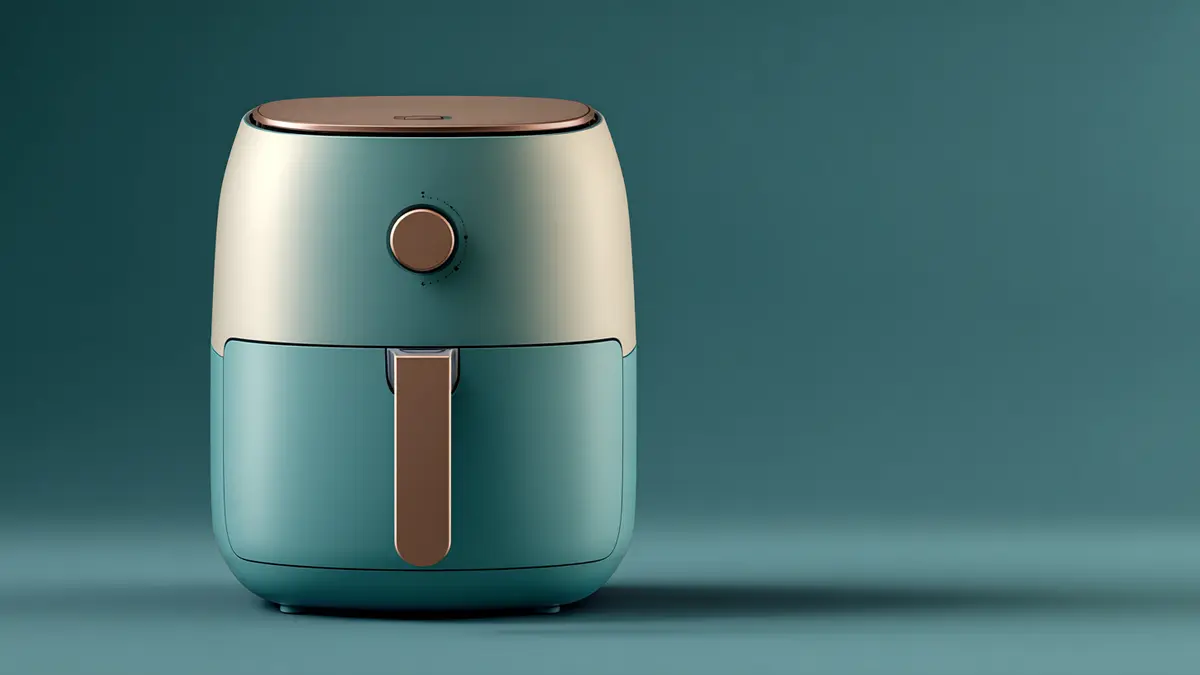
The Trade-Off Nobody Talks About
The marketing case for air fryers is energy-in-use: less electricity than a fan oven, faster cooking, no preheat. That part is real. The part that gets less attention is the embodied cost (the environmental cost of making and disposing of a product) — the materials, the design lifespan, and what happens at end of life.
The Resourcehip Human Impact Profile measures that embodied cost, not the energy a device uses while it cooks. By that measure, the typical mass-market air fryer scores 2.9 out of 10. The full breakdown is on the air fryers rating page. It covers all seven HIP dimensions.
The energy you save in the oven gets quietly handed back when the air fryer is in landfill four years later.
What HIP Measures for an Air Fryer
Three HIP dimensions dominate the air-fryer category:
- Repairability (R). A typical air fryer scores 2/10 — glued construction, no spare parts, no public repair manual. The verified ceiling shows 9/10: screw-fastened, multi-year spare-parts commitment, and a published repair manual.
- Material Scarcity (MSI). PTFE (a non-stick coating) and nichrome (a heat-resistant wire alloy) heating elements appear on critical-materials watchlists (lists of materials at risk of supply shortage). The baseline scores 3.5/10. The ceiling reaches 8.5/10 by switching to recycled stainless steel and aluminium, sourced from multiple countries.
- Recyclability and Circularity (RC). Glued joints and mixed-material baskets keep the baseline at 3.0/10. Barely 20% of the device enters real-world recycling. The ceiling moves to 7.5/10 with a take-back scheme and design-for-disassembly (built to be taken apart).
Energy in use does not appear directly in the HIP score. We score how the product is built, sourced, and recovered. That is where the long-term environmental cost sits, and where consumers have the least visibility.
The Gap Between Baseline and Ceiling
The air-fryer category ceiling — what a verified, fully evidenced submission can currently achieve — is HIP 7.1 / RI -2.0 (Extractive), earning the Standard HIP Mark.
That is a 4.2-point HIP gap between the typical mass-market device and what is technically possible today. It also means a shift across five Regenerative Index tiers. Closing it requires:
- Recycled content moving from 0% (assumed) to 78%
- PTFE and nichrome substitution where possible; full disclosure where not
- Disassembly moving from glued to screw-fastened
- Spare parts shifting from "none" to a stocked multi-year commitment
- Take-back moving from absent to verified
- Design life moving from 4 years to 7+
A category ceiling at HIP 7.1 sits in the Standard band today. Silver (7.5) is within reach for a manufacturer willing to push two of those levers further. Gold (9.0 with RI ≥ +6) requires the regenerative tier. That means closed-loop recovery (where used materials go back into new products) and certified ecosystem restoration (verified projects that repair environmental damage). No air-fryer maker has shown this yet.
What to Check Before You Buy
- Look for screw-fastened construction. If the spec sheet does not say "user-serviceable" or the manufacturer does not publish a teardown, assume glue. Glued air fryers cannot be repaired outside the factory.
- Confirm the warranty length. Two years is the legal minimum and the category norm. A four- or five-year warranty shows the manufacturer expects the unit to last well beyond that.
- Check the basket coating. PTFE works, but cheap PTFE flakes within 18 months and goes straight to landfill. Stainless-steel or ceramic-coated baskets last longer and are easier to recycle.
- Ask about take-back. A ceiling-grade air fryer has a documented take-back route. Most mass-market models do not.
We do not name brands. The four checks above are visible on any manufacturer's product page. They map directly onto the HIP dimensions where this category most underperforms.
How to Read a Resourcehip Air-Fryer Rating
Every air-fryer listing carries:
- A HIP score from 0 to 10, calculated against the air-fryer category baseline.
- A Regenerative Index from -10 to +10, with a tier name (Depleting, Extractive, Renewable, Restorative, Regenerative).
- A HIP Mark on verified ratings only: Standard at 6.0, Silver at 7.5, Gold at 9.0 with RI ≥ +6.
Category Baseline ratings are assigned to any product category where no manufacturer evidence has been submitted. They sit at the conservative default. Verified Ratings, where the manufacturer can show the receipts, can climb up to the ceiling.
For the methodology, see How HIP scoring works. For every air fryer we have rated:
The Bigger Picture
Air fryers are sold on a real environmental virtue: lower in-use energy. But they sit on top of an unaddressed problem — short-lived, unrepairable, hard-to-recycle hardware. The HIP score makes that second half visible.
A category that caps out at HIP 7.1 has clear room to move. None of the levers are exotic. Most have been proven in other appliance categories. The first manufacturer to ship a Silver-grade air fryer in the UK will own the conversation.
Methodology and edits by Chris Bowness; assistive AI used for drafting.